

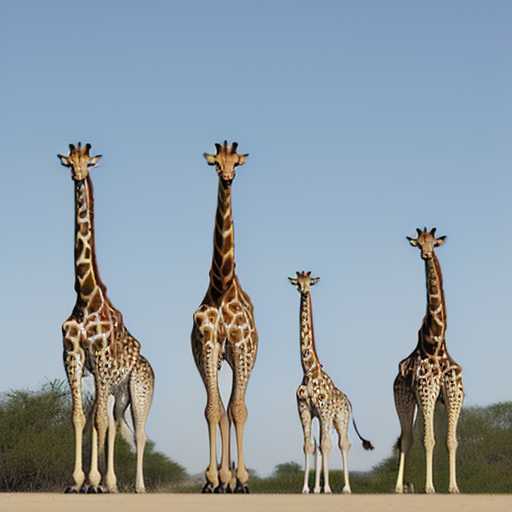
Evolution is a process through which species of organisms change over time. This change is driven by natural selection, which is the differential survival and reproduction of individuals due to differences in heritable traits. Over many generations, these small differences can accumulate, leading to significant changes in the characteristics of a species.
Using giraffes as an example, we can break down how evolution works:
- Genetic variation: Every individual within a population has unique genetic traits. In the case of giraffes, these traits include the length of their necks, the number of vertebrae in their necks, and other physical features. These variations arise from random mutations in DNA, sexual reproduction, and genetic recombination.
- Environmental pressures: Giraffes live in various habitats, such as savannas and forests, where they need to compete for resources like food and mates, avoid predators, and adapt to changing environmental conditions. The environment plays a crucial role in determining which traits are beneficial or detrimental for survival and reproduction.
- Natural selection: Giraffes with heritable traits that help them survive and reproduce better in their environment are more likely to pass on their genes to the next generation. For example, a giraffe with a longer neck may have a better chance of reaching leaves on tall trees, giving it a competitive advantage when it comes to finding food. As a result, this individual is more likely to survive and reproduce, passing on its “long neck” gene to its offspring.
- Generational change: Over many generations, the frequency of the “long neck” gene increases in the population, and the average neck length of the giraffes gradually gets longer. This change in the population’s traits is known as evolution.
- Adaptation: Through this process, giraffes have evolved to have long necks as an adaptation to their environment. Their long necks allow them to reach foliage that other herbivores cannot, providing them with a source of food that is less competed for. This adaptation also helps them avoid predators by making it harder for ground-dwelling predators to reach their vulnerable neck area.
Evolution is not a goal-oriented process; rather, it is the result of random genetic variation and environmental pressures acting upon populations over time. The evolution of giraffes’ long necks is just one example of how species can adapt to their environments through the process of natural selection.