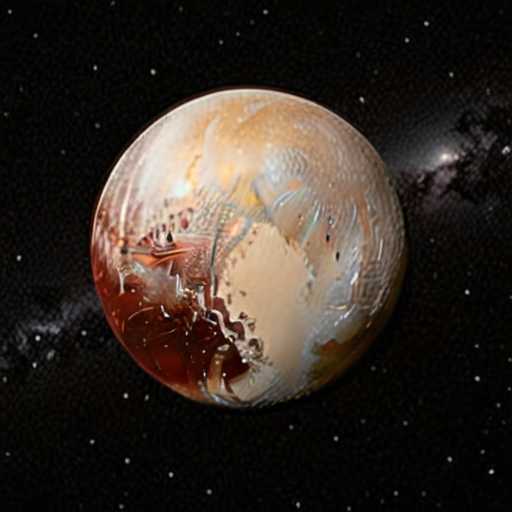

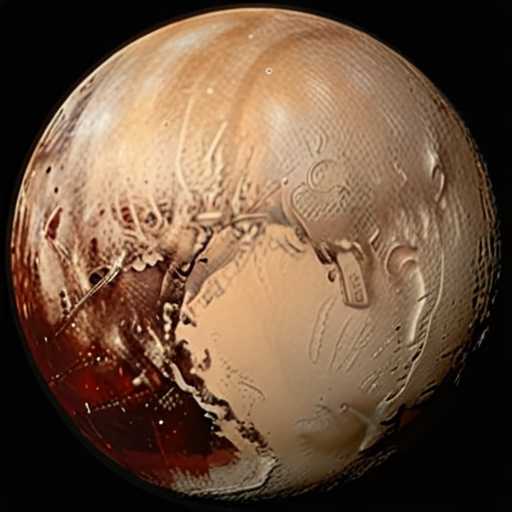
If Pluto had oceans, its tides would look significantly different from those on Earth due to several factors, including its smaller size, weaker gravity, and its distance from its sun, which is the primary driver of tidal forces. Here’s what we might expect:
- Smaller Tidal Ranges: Tides are primarily driven by gravitational forces between a celestial body and the object that is causing the tide (usually a moon or the sun). Since Pluto is much smaller than Earth, its tidal ranges would be smaller as well. This means that the difference in height between high and low tides on Pluto would be less pronounced compared to Earth.
- Longer Tidal Periods: Tidal periods (the time between successive high tides) are related to the length of a celestial body’s day, which is determined by its rotation period. Since Pluto takes about 6.4 Earth days to rotate once on its axis, its tidal periods would be longer than Earth’s 12-hour lunar tidal period. This would result in a slower ebb and flow of Plutonian ocean tides.
- More Extreme Tidal Forces: Although Pluto has five known moons, only its largest moon, Charon, would have a significant effect on Pluto’s tides due to its relatively large size and close proximity. However, Pluto’s weak gravity means that the tidal forces acting on its oceans would be weaker than those acting on Earth’s oceans. This could lead to more extreme tidal deformations, with greater compression of water on the side facing Charon and greater rarefaction on the far side.
- Frozen Ocean Layers: Due to Pluto’s extreme cold, with surface temperatures averaging around -230°C (-380°F), any liquid water on its surface would likely be frozen for most of its orbit. This means that Pluto’s tidal patterns would be influenced by the freezing and thawing of its water, leading to a more complex interaction between solid and liquid states.
- Seasonal Effects: Pluto’s highly elliptical orbit around the sun results in a 248-Earth-year-long year, during which it experiences extreme variations in temperature and sunlight exposure. This would likely affect the formation, stability, and appearance of Pluto’s hypothetical ocean tides, as well as the behavior of any liquid water.
In summary, if Pluto had oceans, its tides would likely appear different from Earth’s tides due to factors such as smaller size, weaker gravity, and its distance from the sun. The tides would be smaller, have longer periods, exhibit more extreme tidal forces, and be influenced by frozen ocean layers and seasonal effects. However, since Pluto does not have oceans, these are purely theoretical predictions based on current understanding of tidal dynamics.