

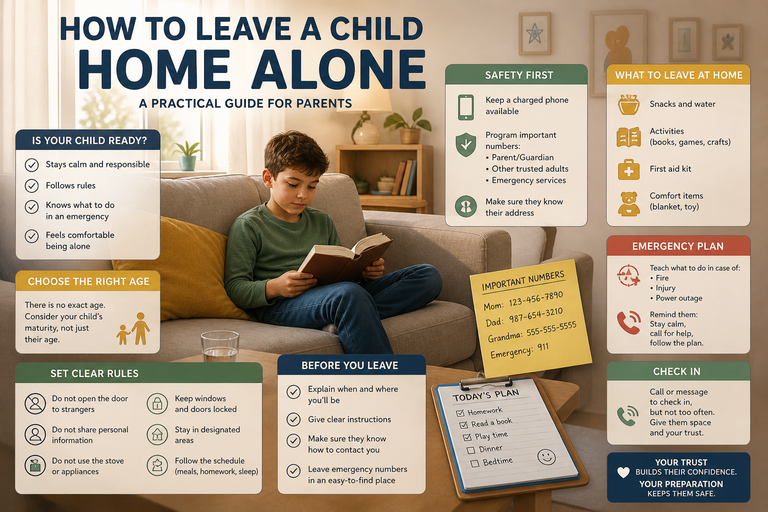
Leaving a child alone for short periods is a normal part of development, helping them build independence, problem-solving skills, and self-confidence. However, it’s essential to consider the child’s age, maturity, and ability to handle responsibility before leaving them unsupervised. Here are some tips for leaving your child alone safely:
- Age Appropriateness: Assess your child’s age and developmental stage. Generally, children under the age of 8 should not be left alone for extended periods. Older children can manage shorter periods of time alone, but always consider their individual abilities and maturity levels.
- Establish Trust: Ensure that your child understands the importance of staying safe and following rules while you’re away. Discuss clear expectations for their behavior and consequences for not following them. Build trust by gradually increasing the amount of time they spend alone and consistently praising responsible behavior.
- Teach Essential Skills: Equip your child with essential life skills, such as how to use the phone to call for help, basic first aid, and how to operate household appliances safely. This will increase their confidence and ability to handle simple tasks while you’re away.
- Create a Safe Environment: Childproof your home to minimize risks and ensure a safe environment. Install locks on doors and cabinets containing hazardous materials, such as cleaning supplies or medications. Make sure all necessary contact information is easily accessible.
- Set Ground Rules: Establish clear guidelines for what your child can and cannot do while alone. This may include no playing with dangerous toys, no cooking without supervision, and no allowing friends into the house without your permission.
- Provide Structured Activities: Give your child a list of age-appropriate activities to choose from while you’re away. This can include reading, puzzles, creative projects, or educational games. Structure also helps prevent boredom, which can lead to risky behaviors.
- Communicate Regularly: When leaving your child alone, maintain open communication. Let them know when you’ll be back, how to reach you in case of an emergency, and that you trust them to follow the rules. Offer reassurance and remind them that you’ll return soon.
- Start Small: Begin by leaving your child alone for short periods, such as 10-15 minutes, and gradually increase the duration as they demonstrate responsibility and maturity. Be consistent with your expectations and praise your child when they meet them.
- Have a Plan in Case of Emergency: Ensure your child knows how to contact you or another trusted adult in case of an emergency. Leave clear instructions on how to call for help and include important phone numbers, such as those for neighbors, relatives, or local emergency services.
- Monitor Progress: Keep an eye on your child’s ability to handle increasing amounts of time alone. If you notice any issues or concerns, address them promptly and adjust your expectations accordingly. Remember that each child develops at their own pace, and it’s essential to respect their individual needs and limits.
Leaving a child alone requires careful consideration of their age, maturity, and ability to handle responsibility. By following these tips, you can help your child develop essential life skills while ensuring their safety and well-being.